
Prime rib is a popular beef roast known for its rich flavor, tender texture, and impressive appearance at holiday dinners and special occasions. However, the name can be confusing when you see different terms on restaurant menus, butcher labels, and recipes. You might find it listed as a standing rib roast, beef rib roast, or even a ribeye roast, depending on how the meat is prepared and sold.
Understanding these names makes it easier to shop for the right cut, follow a recipe, or order a meal at a steakhouse. Although several terms refer to the same general cut of beef, some have important differences. This guide explains the most common alternatives, traditional culinary terms, menu descriptions, and related beef cuts so you can identify what you need with confidence.
Common Other Names for Prime Rib
Prime rib has several alternative names, especially when it is sold as a large roast rather than served as a cooked meal. These terms usually describe the same general section of beef, although preparation and butchering can vary.
- Standing Rib Roast The classic name for a rib roast cooked with its bones standing beneath the meat.
- Beef Rib Roast A straightforward name used by butchers and grocery stores.
- Rib Roast A shorter, widely understood term for a roast taken from the beef rib section.
- Prime Rib Roast A common name for the whole roast before it is cooked and carved.
- Bone-In Rib Roast Describes a roast that retains its rib bones.
- Boneless Rib Roast A rib roast with the bones removed for easier carving.
- Beef Ribeye Roast A boneless roast from the rib section, often sold under this name.
- Ribeye Roll Roast A butcher’s term for a boneless ribeye section prepared as a roast.
- First-Cut Rib Roast A name sometimes used for the smaller, more tender end of the rib roast.
- Second-Cut Rib Roast A term often used for the larger end of the roast, which can contain more fat.
- Export Rib Roast A traditional meat-industry term associated with a rib roast prepared for commercial sale.
- Holiday Rib Roast A descriptive name for a rib roast served at festive gatherings.
- Sunday Rib Roast A traditional-style name for a roast served at a family meal.
- Roasted Beef Ribs A menu-style description that may refer to roasted rib meat, though it is not always the same cut.
- Premium Beef Rib Roast A marketing description for a higher-end rib roast, not a separate official cut.
Best overall alternative: Standing rib roast is one of the most accurate traditional names for bone-in prime rib.
Traditional Butcher Terms for Prime Rib
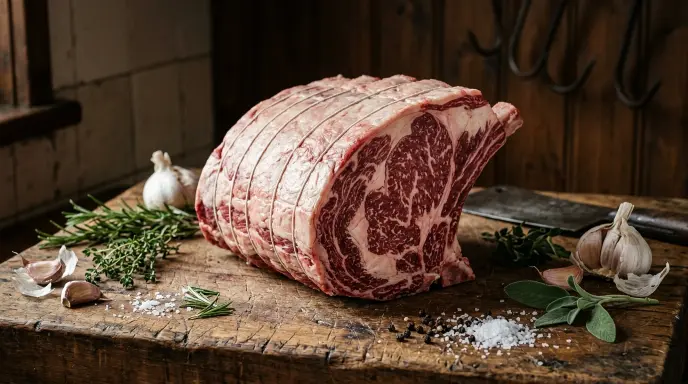
Butchers use specific terms to describe how a rib roast is cut, trimmed, and prepared. Knowing these names can help you purchase the correct roast without relying on a restaurant-style label.
- Standing Rib Roast A bone-in roast that can stand upright on its rib bones.
- Rib Primal The larger section of the cow from which rib roasts and ribeye steaks are cut.
- Ribeye Roll The boneless ribeye muscle section commonly used for premium steaks and roasts.
- Bone-In Ribeye Roast A ribeye roast with the bones still attached.
- Boneless Ribeye Roast The same general ribeye section with the bones removed.
- Rib Roast with Cap A roast that retains the flavorful outer ribeye cap muscle.
- Ribeye Cap Roast A roast made primarily from the prized outer cap muscle, rather than the entire prime rib.
- Lip-On Rib Roast A butcher’s description for a rib roast that retains a section of adjoining meat, depending on the cutting specification.
- Frenched Rib Roast A roast with exposed rib bones cleaned of meat and tissue for presentation.
- Trimmed Rib Roast A roast with some exterior fat or excess tissue removed.
- Untrimmed Rib Roast A roast that retains more of its original exterior fat.
- Rib Roast with Deckle A descriptive term that may refer to a roast retaining additional outer muscle, depending on the butcher’s terminology.
- Three-Rib Roast A roast containing three rib bones.
- Four-Rib Roast A larger roast with four rib bones.
- Seven-Rib Roast A large roast that includes seven ribs from the rib section.
These terms are not all exact synonyms. Some describe the cut’s location, while others refer to bone structure, trimming, or size. If you want traditional prime rib, ask your butcher for a standing rib roast.
Restaurant Menu Names for Prime Rib
Restaurants often use appealing descriptions instead of the standard butcher’s terminology. These menu names can help diners recognize prime rib even when the words are not identical.
- Slow-Roasted Prime Rib Highlights the slow cooking method used to develop flavor and tenderness.
- Herb-Crusted Rib Roast Describes a roast coated with herbs and seasonings.
- Classic English-Style Roast Beef A traditional roast-beef description that may refer to different cuts, including rib roast.
- Carved Rib Roast Emphasizes that the roast is sliced and served at the table or carving station.
- Roast Beef au Jus Roast beef served with its natural cooking juices or a related sauce.
- Prime Rib au Jus Prime rib served with a savory beef jus.
- Garlic-Crusted Rib Roast A rib roast seasoned with garlic.
- Rosemary Rib Roast A roast flavored with rosemary.
- Pepper-Crusted Prime Rib Prime rib coated with cracked black pepper or a pepper seasoning blend.
- Sunday Roast Beef A broad traditional menu term that may include prime rib.
- Carving Station Rib Roast A large roast presented for freshly sliced servings.
- Chef-Carved Beef Rib Roast A menu description highlighting the carving service.
- Holiday Beef Roast A seasonal description that may refer to prime rib or another beef roast.
- Slow-Roasted Beef Ribeye A name emphasizing the ribeye section and slow roasting.
- Premium Rib Roast Dinner A menu label for a rib roast meal, often served with side dishes.
Remember that menu descriptions do not always identify a precise cut. If you specifically want prime rib, check the menu details or ask your server.
Other Names for Prime Rib Based on Cooking Style
The same general cut can have different names depending on how it is seasoned and cooked. These descriptions are useful when searching for recipes or planning a meal.
- Slow-Roasted Beef Rib Highlights low-temperature cooking over an extended period.
- Oven-Roasted Ribeye A ribeye roast cooked in the oven.
- Garlic Butter Rib Roast A roast prepared with garlic and butter.
- Herb-Roasted Beef Rib A rib roast seasoned with herbs.
- Reverse-Seared Rib Roast A roast cooked gently before being finished at high heat.
- Smoked Beef Rib Roast A rib roast cooked in a smoker for a smoky flavor.
- Grilled Ribeye Roast A ribeye roast cooked on a grill, often with indirect heat.
- Rotisserie Rib Roast A roast cooked while rotating over a heat source.
- Salt-Crusted Rib Roast A roast enclosed in a salt crust during cooking.
- Peppercorn-Crusted Ribeye Roast A ribeye roast coated in crushed peppercorns.
- Mustard-Crusted Rib Roast A roast coated with mustard and seasonings.
- Rosemary-Garlic Roast Beef A general roast-beef description for a preparation that may use a rib roast.
- Red Wine Rib Roast A rib roast served with or cooked alongside red wine flavors.
- Beef Rib Roast with Pan Drippings Emphasizes the natural juices collected during roasting.
- Slow-Cooked Ribeye Roast A ribeye roast cooked slowly to develop a tender texture.
These are preparation names, not separate cuts of meat. A slow-roasted ribeye roast may be similar to prime rib, but the recipe and the exact cut determine the final result.
Premium Beef Cuts Related to Prime Rib
Some beef cuts are closely related to prime rib because they come from the same general area of the animal. Others offer a similar eating experience but are not true synonyms.
- Ribeye Steak A steak cut from the rib section, known for its marbling and rich flavor.
- Bone-In Ribeye Steak A ribeye steak with the rib bone attached.
- Boneless Ribeye Steak A ribeye steak with the bone removed.
- Cowboy Steak A thick, bone-in ribeye steak, often with a short exposed bone.
- Tomahawk Steak A bone-in ribeye with a long rib bone left attached.
- Ribeye Cap Steak A steak cut from the outer cap muscle of the ribeye.
- Ribeye Filet A term sometimes used for a boneless, center-cut ribeye portion.
- Chuck-Eye Steak A cut from the neighboring chuck section that can offer a beefy flavor at a lower price.
- Strip Steak A steak from the short loin, offering a firmer texture than ribeye.
- Tenderloin Roast A very tender roast from a different section of the cow.
- Top Sirloin Roast A leaner roast from the sirloin section.
- Tri-Tip Roast A triangular cut from the bottom sirloin, commonly roasted or grilled.
- Shoulder Roast A roast from the shoulder area, generally less similar in texture to prime rib.
- Beef Clod Roast A cut from the shoulder that is often used for slow cooking.
- Strip Loin Roast A roast from the short loin, typically leaner than a rib roast.
Of these options, ribeye steak and ribeye roast are the closest relatives. The other cuts can work as alternatives for different budgets, recipes, or preferences, but they should not be described as identical to prime rib.
What Is Prime Rib Called at the Grocery Store?
Grocery stores may label the same general cut in several ways. The exact name depends on the store, the packaging, and whether the roast contains bones.
- Beef Rib Roast A common label in supermarket meat departments.
- Standing Rib Roast Often used for a bone-in holiday roast.
- Bone-In Ribeye Roast A clear option if you want the rib bones attached.
- Boneless Ribeye Roast A practical choice for easier carving.
- Ribeye Roll A name that may appear in larger meat departments or wholesale packaging.
- USDA Choice Rib Roast Indicates a USDA quality grade, not a different cut.
- USDA Prime Rib Roast May refer to a rib roast graded USDA Prime.
- Angus Rib Roast A label that refers to the beef’s breed-related marketing or program designation.
- Grass-Fed Rib Roast Describes the animal’s feeding program, subject to the product’s labeling standards.
- Wagyu Rib Roast A rib roast marketed as Wagyu beef.
- Boneless Beef Rib A simplified label that may be used for a boneless rib cut.
- Premium Beef Roast A broad retail description that requires checking the actual cut.
- Holiday Rib Roast A seasonal label used by some retailers.
- Ribeye Roast with Cap Indicates that the roast retains the ribeye cap.
- Pre-Seasoned Rib Roast A roast sold with seasoning already applied.
One important distinction is the word prime. Prime rib does not automatically mean the beef has the USDA Prime grade. A rib roast can be graded USDA Choice or another grade and still be sold as prime rib.
Prime Rib vs. Ribeye Roast: Are They the Same?
Prime rib and ribeye roast are closely related terms, but their use can vary by butcher and retailer. Both generally refer to meat from the beef rib section.
A traditional prime rib is often prepared as a large roast, commonly with the bones attached. A ribeye roast may be sold bone-in or boneless. The main difference is often the way the cut is presented, prepared, and marketed rather than the location of the meat.
Here are 12 useful distinctions to keep in mind:
- Cut location: Both generally come from the rib section.
- Bone structure: Prime rib is traditionally associated with a bone-in roast, while ribeye roasts can be boneless.
- Cooking method: Prime rib is commonly oven-roasted, but ribeye roasts can be roasted, smoked, or grilled.
- Serving style: Prime rib is often sliced into thick portions for a meal.
- Butchering: A ribeye roast may have its bones removed and be tied into a uniform shape.
- Presentation: Standing rib roasts can create a dramatic centerpiece for a holiday table.
- Texture: Both can be tender and well-marbled, depending on the cut and quality.
- Flavor: Both offer the rich beef flavor associated with the rib section.
- Price: Cost depends on quality grade, region, retailer, and bone-in or boneless preparation.
- Carving: Boneless roasts are often easier to slice neatly.
- Cooking time: Weight, thickness, oven temperature, and desired doneness matter more than the name alone.
- Labeling: Retailers may use these terms differently, so check the package description.
For most home cooks, either a standing rib roast or a ribeye roast can be an excellent choice. Focus on the actual cut, the number of servings, and the cooking method rather than relying on the name alone.
What Is a Good Substitute for Prime Rib?
If prime rib is unavailable or too expensive, several other beef cuts can make a satisfying roast. The best substitute depends on whether you care most about tenderness, rich flavor, price, or ease of preparation.
- Ribeye Roast The closest alternative when you want a similar rib-section roast.
- Chuck Roast A more affordable option that works well with slow, moist cooking.
- Top Sirloin Roast A leaner choice with a firm texture and beefy flavor.
- Strip Loin Roast A premium roast that is generally leaner than ribeye.
- Tenderloin Roast Extremely tender, although it has a milder flavor and less marbling.
- Tri-Tip Roast A smaller roast that works well with grilling or oven roasting.
- Shoulder Roast A practical option for braising and slow cooking.
- Bottom Round Roast A lean cut best suited to careful cooking and thin slicing.
- Top Round Roast Another lean option for traditional roast beef.
- Sirloin Tip Roast A relatively lean roast suitable for slicing.
- Chuck-Eye Roast A cut near the rib section that may offer a rich flavor.
- Beef Brisket A flavorful alternative that typically benefits from long, slow cooking.
- Cross-Rib Roast A shoulder-area roast often used for braising or roasting.
- Eye of Round Roast A lean, economical cut that needs careful cooking to avoid dryness.
- Bone-In Ribeye A large bone-in ribeye preparation can provide a similar flavor profile, depending on its size and presentation.
A ribeye roast is usually the most direct substitute. For a budget-friendly meal, chuck or sirloin may work better, but each cut needs a cooking method suited to its fat content and connective tissue.
How to Choose the Right Cut for Your Recipe
Choosing a suitable roast is easier when you know what you want from the finished meal. Use these practical tips before buying beef.
- Check the cut name. Look for standing rib roast, beef rib roast, or ribeye roast if you want something close to traditional prime rib.
- Decide between bone-in and boneless. Bone-in roasts have a traditional presentation, while boneless roasts are often easier to carve.
- Look at the marbling. Fine streaks of fat within the meat can contribute to flavor and tenderness.
- Consider the number of guests. Choose the roast size based on the number of servings you need and whether you want leftovers.
- Understand the grade. USDA Prime and USDA Choice are quality grades. The term prime rib alone does not guarantee a USDA Prime grade.
- Match the cooking method to the cut. Rib roasts are well suited to roasting, while tougher cuts often benefit from slow cooking or braising.
- Read the label carefully. Marketing terms such as premium roast or holiday beef do not always identify a precise cut.
- Ask the butcher. If the package name is unclear, ask whether the roast comes from the rib section and whether the bones have been removed.
A little attention at the meat counter can help you avoid buying a different cut when a recipe specifically calls for prime rib.
FAQs:
What is the most common other name for prime rib?
The most common traditional alternative is standing rib roast, especially when the roast is bone-in. Beef rib roast is another widely used name.
Is prime rib the same as a ribeye roast?
They generally come from the same section of the cow. Prime rib usually refers to a large roast prepared for carving, while ribeye roast can be bone-in or boneless. Usage varies by butcher and retailer.
Is prime rib the same as roast beef?
No. Roast beef is a broad term for beef that has been roasted. Prime rib is a particular style of roast associated with the rib section, although other cuts can also be prepared as roast beef.
What should I ask for at the butcher shop?
Ask for a standing rib roast if you want the traditional bone-in version. If you prefer a boneless cut, request a boneless ribeye roast or boneless beef rib roast.
Does prime rib have to be USDA Prime grade?
No. Prime rib refers to the cut and preparation, not necessarily the USDA grade. The beef may be labeled USDA Prime, USDA Choice, or another applicable grade.
What is the best affordable substitute for prime rib?
Chuck roast and top sirloin roast are common alternatives. Chuck is especially useful for slow cooking, while top sirloin offers a leaner roast suitable for slicing.
Is a standing rib roast better than a boneless ribeye roast?
Neither is automatically better. A standing rib roast offers traditional presentation, while a boneless ribeye roast is easier to carve. Your choice depends on your cooking method and serving preferences.
Can I use a ribeye steak instead of prime rib?
You can use ribeye steaks if you want a similar flavor, but they are individual portions rather than a large roast. Cooking time and preparation will be different.
Conclusion
Prime rib goes by several names, including standing rib roast, beef rib roast, and ribeye roast. Although these terms often describe closely related cuts, details such as bone structure, trimming, and quality grade can differ.
If you want the traditional version, ask for a standing rib roast. For easier carving, consider a boneless ribeye roast. If you need a more affordable alternative, sirloin or chuck may suit your recipe better. Understanding these names will help you shop confidently, follow recipes accurately, and choose the right cut for your next special meal.