
Moonlight has a special place in Japanese culture, poetry, and art. It can represent peace, beauty, mystery, romance, and the quiet magic of the night. If you’re searching for a Japanese name inspired by moonlight, you may want something delicate and meaningful for a baby, a fictional character, a pet, a username, or a creative project.
Japanese offers several beautiful words related to the moon, moonlight, and the night sky. Some are direct vocabulary words, while others are names created with kanji characters that carry lunar meanings. It’s important to remember that a Japanese name’s meaning and pronunciation can change depending on the characters used.
This guide shares elegant, cute, rare, romantic, and nature-inspired ideas, along with their meanings and cultural context. You’ll also learn how to choose a name that sounds beautiful and fits your intended use.
Beautiful Japanese Words and Names That Mean Moonlight
If you want a name closely connected to the glow of the moon, start with Japanese vocabulary and established lunar expressions. These choices are especially useful for writers, artists, and anyone who appreciates Japanese language and culture.
- Gekkō (月光) — Moonlight. A direct and poetic word for the light of the moon.
- Tsukiakari (月明かり) — Moonlight or illumination from the moon. It evokes a softly lit night.
- Getsumei (月明) — Moon brightness. A literary-style combination associated with a bright moon.
- Meigetsu (名月) — A beautiful or celebrated moon, often associated with the traditional autumn moon-viewing season.
- Mangetsu (満月) — Full moon. A strong choice for a name inspired by completeness.
- Mikazuki (三日月) — Crescent moon, especially the moon seen around the third day of the lunar month.
- Shingetsu (新月) — New moon. It suggests beginnings and a fresh start.
- Gekka (月華) — Moon radiance or moonlight, with a refined, poetic feel.
- Getsurin (月輪) — The moon’s disk or circular form. It sounds formal and literary.
- Tsukiyo (月夜) — Moonlit night. A lovely choice for a character or creative identity.
- Yozora (夜空) — Night sky. Although it doesn’t directly mean moonlight, it creates a similar nighttime atmosphere.
- Tsukishiro (月白) — Moon-white or a pale, moonlit color in poetic usage.
- Kōgetsu (皓月) — A bright, clear moon; a literary expression associated with luminous moonlight.
- Seigetsu (清月) — Clear or pure moon, depending on interpretation.
- Getsumei (月明) — Another possible reading of a moon-brightness combination; the exact interpretation depends on context.
Best choices: Gekkō and Tsukiakari are the clearest options if you want a word that actually refers to moonlight. Mikazuki works well for a crescent-moon theme, while Tsukiyo has a gentle, poetic mood.
Note that several items above are poetic words or kanji combinations rather than common Japanese given names. If you plan to use one as a real person’s name, check its naturalness and reading with a fluent Japanese speaker.
Cute Japanese Names Inspired by Moonlight
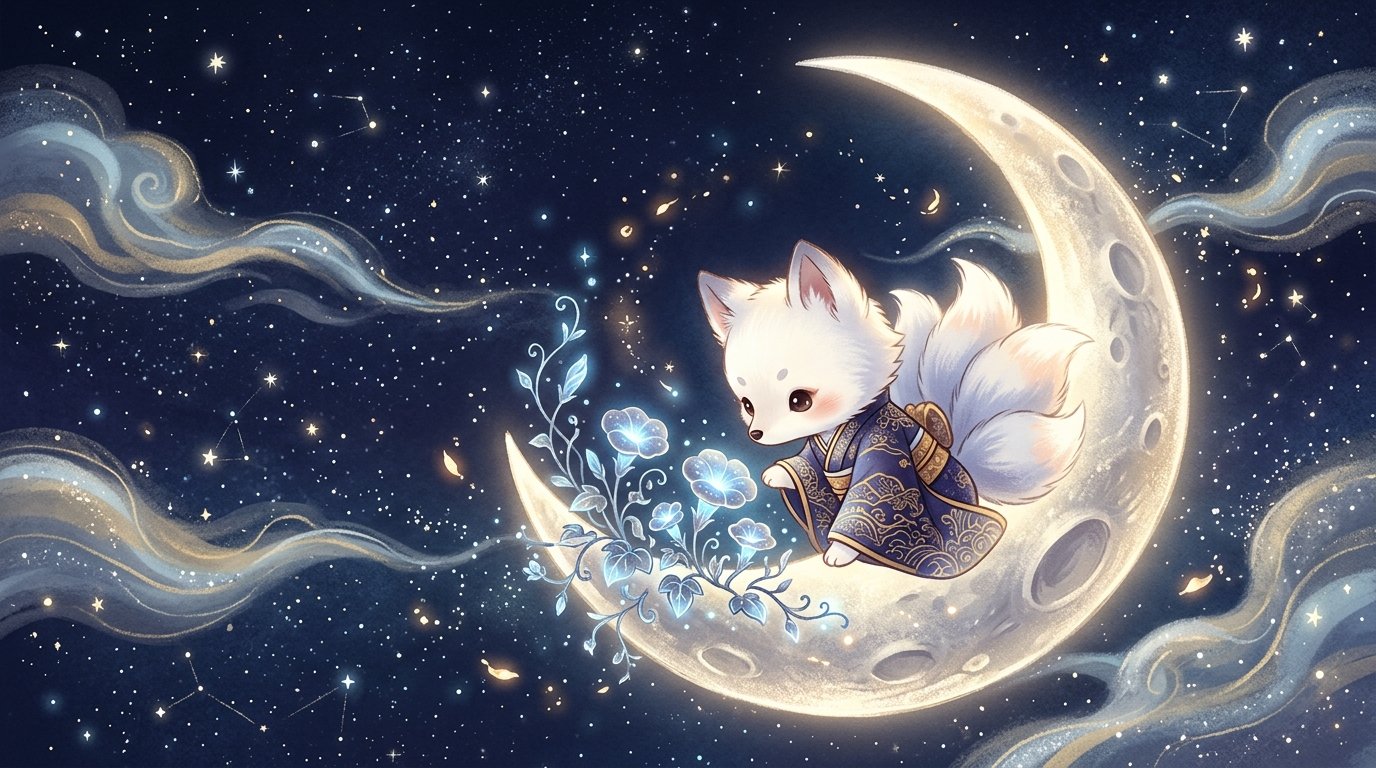
Cute names often have soft sounds and gentle meanings. Japanese words connected to the moon, stars, and the night sky can make lovely choices for a pet, a fictional character, or a nickname.
- Tsuki (月) — Moon. Short, sweet, and easy to remember.
- Luna — A Latin word for moon, not a Japanese word, but familiar in Japanese pop culture.
- Hina (陽菜, ひな) — A Japanese given name with possible meanings related to sunlight and greenery, depending on its kanji.
- Runa (るな) — A Japanese name sometimes associated with the moon through its chosen characters or sound.
- Yuna (優奈, ゆな) — A popular-style feminine name whose meaning depends on its kanji.
- Mio (美桜, みお) — A name that can be written with characters meaning beautiful and cherry blossom.
- Mitsuki (美月, みつき) — A name that can mean beautiful moon when written with these kanji.
- Koharu (小春, こはる) — Little spring; a warm and gentle name.
- Hotaru (蛍, ほたる) — Firefly, perfect for a nighttime nature theme.
- Hoshi (星) — Star. A simple word with a celestial feeling.
- Niko (にこ) — A cheerful-sounding name often associated with smiling.
- Yume (夢) — Dream. A lovely choice for a dreamy moon-themed character.
- Suzu (鈴) — Bell. It has a light, delicate sound.
- Airi (愛莉, あいり) — A feminine name with possible meanings involving love and jasmine, depending on its characters.
- Momo (桃) — Peach. A cute, familiar Japanese word that also works as a nickname.
Best picks: Tsuki is the most direct lunar choice, while Mitsuki can connect beauty and the moon through its kanji. Yume is ideal for a character with a dreamy personality.
Unique Japanese Names With a Moonlight Meaning
If you prefer something less common, consider poetic expressions and carefully chosen kanji combinations. Some are established words, while others are creative name concepts rather than traditional given names.
- Tsukikage (月影) — Moon shadow or the appearance of moonlight.
- Gekkō (月光) — Moonlight; striking and artistic.
- Getsurin (月輪) — The moon’s circular disk.
- Tsukishiro (月白) — Moon-white or pale lunar brightness.
- Yūgetsu (夕月) — Evening moon, a poetic combination.
- Kōgetsu (皓月) — Bright, clear moon.
- Reigetsu (麗月) — Beautiful moon, as a creative kanji combination.
- Getsuka (月花) — Moon and flower, a poetic name idea.
- Tsukihana (月花) — Moon flower; a creative combination with a gentle sound.
- Akatsuki (暁) — Dawn. It represents the transition from night to morning.
- Yoizuki (宵月) — Evening moon, a poetic-style name.
- Sakuyoi (昨宵) — Last evening or the previous night; a literary-sounding concept.
- Hakugetsu (白月) — White moon, a creative combination that suggests pale light.
- Tsukisora (月空) — Moon sky, a modern, invented combination.
- Kagetsu (花月) — Flower and moon, a combination used in Japanese literary and artistic contexts.
These options are especially suited to fantasy characters, pen names, art projects, and online identities. For an actual Japanese given name, confirm that the reading is natural and appropriate before settling on a kanji spelling.
Cool Japanese Names for a Moonlit Character
A moonlight-inspired character might be mysterious, brave, calm, or connected to supernatural themes. These Japanese words and names offer a range of moods without relying on the same moon-related term each time.
- Tsukuyomi (月読) — The name of a Japanese moon deity.
- Amaterasu (天照) — The name of a major Japanese sun deity; a striking contrast for a lunar character.
- Susanoo (須佐之男) — A Japanese deity associated with storms and the sea.
- Yoru (夜) — Night. Short and mysterious.
- Rei (玲, 怜, or other kanji) — A name with different possible meanings depending on the characters.
- Ren (蓮) — Lotus. A concise name with a calm, elegant image.
- Riku (陸) — Land. A strong, simple masculine name.
- Sora (空) — Sky. Often used as a given name.
- Hayate (疾風) — Swift wind, a dynamic name associated with speed.
- Kaito (海斗, among other spellings) — A Japanese given name with meanings that vary by kanji.
- Shion (紫苑, among other spellings) — A name associated with an aster flower in one common spelling.
- Akira (明, among other spellings) — Can convey brightness or clarity.
- Makoto (誠) — Sincerity or truth.
- Itsuki (樹, among other spellings) — Can mean tree when written with this character.
- Raiden (雷電) — Thunder and lightning; powerful rather than directly lunar.
For a cool moonlit character, Tsukuyomi is the strongest mythological choice. Yoru suits a quiet, mysterious personality, while Akira works for someone whose story revolves around light or revelation.
Elegant Japanese Names for Moonlight and Lunar Beauty
Elegant names often feel balanced and timeless. Japanese expressions connected to clarity, flowers, beauty, and the night can evoke moonlight without making every name a literal translation.
- Mitsuki (美月) — Beautiful moon.
- Ritsuki (りつき) — A possible name reading whose meaning depends on the kanji selected.
- Kiyora (清良, as a creative spelling) — Can suggest purity and goodness through its characters.
- Shizuku (雫) — Droplet; delicate and nature-inspired.
- Ayame (菖蒲) — Iris.
- Kaori (香織, among other spellings) — Often associated with fragrance through its kanji.
- Sayuri (小百合) — Little lily.
- Mizuki (瑞希, among other spellings) — A Japanese name with meanings that depend on its spelling.
- Nozomi (望) — Hope or wish.
- Chihiro (千尋) — A name whose meaning depends on its written characters; it has a graceful sound.
- Fuyuka (冬花, as a name idea) — Winter flower.
- Yukari (ゆかり, among other spellings) — Can convey connection or relationship when written with 縁.
- Kanade (奏) — To play or perform music.
- Kotone (琴音) — Koto sound, suggesting the tone of a traditional Japanese instrument.
- Miyabi (雅) — Elegance or refinement.
For an elegant lunar aesthetic, Mitsuki is a particularly fitting choice because of its explicit moon kanji. Miyabi works well for a refined character, while Kotone adds a quiet musical quality.
Japanese Female Names Inspired by Moonlight
Japanese feminine names can be associated with the moon through their kanji, or they can simply evoke the softness and beauty of a moonlit evening. The meanings below apply to specific spellings where provided; other spellings may have different meanings.
- Mitsuki (美月) — Beautiful moon.
- Mizuki (美月) — Beautiful moon when written with these characters.
- Runa (るな) — A name often chosen for its lunar association.
- Tsukiko (月子) — Moon child.
- Kaguya (かぐや) — Inspired by Princess Kaguya from the Japanese folktale The Tale of the Bamboo Cutter.
- Akari (明かり) — Light or illumination.
- Hikari (光) — Light.
- Shizuka (静) — Calm or quiet.
- Yukina (雪菜, among other spellings) — Can combine snow and greenery.
- Nanami (七海, among other spellings) — Seven seas when written with these characters.
- Haruka (遥, among other spellings) — Can convey distance or remoteness.
- Aoi (葵, among other spellings) — Often written with a character associated with hollyhock.
- Kohane (小羽) — Little feather.
- Hotaru (蛍) — Firefly.
- Sayaka (清香, among other spellings) — Can suggest purity and fragrance.
Tsukiko is a clear choice if you want a name that directly combines the moon and a child. Kaguya is ideal for a character inspired by Japanese folklore, while Akari and Hikari emphasize the glow associated with moonlight.
Japanese Male Names With a Moonlit Feel
For a male character or a masculine-style name, consider options associated with the moon, the sky, brightness, or traditional Japanese mythology. Not all of these names literally mean moonlight, but each can suit a lunar theme.
- Tsukito (月人, creative name spelling) — Moon person.
- Mitsuki (光希, among other spellings) — Can suggest light and hope.
- Akito (明人, among other spellings) — Can suggest a bright person.
- Haruki (春輝, among other spellings) — Can evoke spring and radiance.
- Yukito (雪人, creative spelling) — Snow person.
- Kōki (光輝, among other spellings) — Radiance or shining light.
- Sōma (颯真, among other spellings) — A given name with meanings that depend on its characters.
- Minato (湊) — Harbor or gathering place.
- Asahi (朝日) — Morning sun.
- Takeru (武, among other spellings) — A masculine name that can convey strength.
- Kazuki (和希, among other spellings) — Can suggest harmony and hope.
- Yamato (大和) — An established Japanese name and historical term associated with Japan.
- Naoki (直樹, among other spellings) — Can convey honesty and a tree.
- Satoshi (聡, among other spellings) — Can suggest wisdom or intelligence.
- Takumi (匠) — Artisan or craftsperson.
For a male character whose identity centers on moonlight, Tsukito is a creative option, while Kōki is better suited to a character associated with brilliance. Keep in mind that a name’s perceived gender and naturalness can vary by context.
Short Japanese Names for a Moonlight Theme
Short names are easy to remember, pronounce, and use in stories or online profiles. These choices range from direct Japanese words to established given names.
- Tsuki (月) — Moon.
- Yoru (夜) — Night.
- Hoshi (星) — Star.
- Rei (玲, among other spellings) — A short given name with several possible meanings.
- Rin (凛) — Dignified or poised.
- Ren (蓮) — Lotus.
- Mio (澪, among other spellings) — Can refer to a waterway or channel.
- Aoi (葵) — Hollyhock in one common spelling.
- Yui (結衣, among other spellings) — Can suggest tying or connection, depending on the characters.
- Nagi (凪) — Calm weather or a lull in the wind.
- Sora (空) — Sky.
- Kai (海, among other spellings) — Sea when written with this character.
- Mei (芽依, among other spellings) — A name whose meaning depends on the kanji.
- Rui (類, among other spellings) — A short name with multiple possible spellings and meanings.
- Hina (ひな, among other spellings) — A gentle-sounding Japanese given name.
Tsuki is the clearest short choice for a lunar theme. Nagi is ideal for a peaceful atmosphere, while Sora and Hoshi work well for a broader celestial theme.
Japanese Nature Names That Match the Glow of Moonlight
Moonlight often looks most beautiful when it falls across water, flowers, snow, or trees. Nature-inspired Japanese words can capture that feeling without directly naming the moon.
- Yuki (雪) — Snow.
- Hana (花) — Flower.
- Sakura (桜) — Cherry blossom.
- Kaede (楓) — Maple.
- Umi (海) — Sea.
- Mizumi (湖, with the reading mizuumi) — Lake; the standard word is mizuumi, not usually the given-name reading Mizumi.
- Ame (雨) — Rain.
- Kiri (霧) — Mist or fog.
- Kaze (風) — Wind.
- Mori (森) — Forest.
- Nami (波) — Wave.
- Shizuku (雫) — Droplet.
- Hotaru (蛍) — Firefly.
- Tsubaki (椿) — Camellia.
- Sumire (菫) — Violet.
For a misty, moonlit setting, Kiri and Nami work especially well as words for creative projects. Sakura and Tsubaki are better suited to floral imagery, while Hotaru brings a tiny point of light to a nighttime scene.
Romantic Japanese Names for Moonlight

Moonlight is a familiar symbol of romance in many cultures. Japanese words connected to love, dreams, flowers, and quiet evenings can create a tender name for a story, a couple’s project, or a romantic character.
- Tsukiko (月子) — Moon child.
- Tsukiyo (月夜) — Moonlit night.
- Ai (愛) — Love.
- Aiko (愛子) — Love child when written with these characters.
- Yume (夢) — Dream.
- Koi (恋) — Romantic love or longing.
- Kokoro (心) — Heart or mind.
- Hoshimi (星美, creative spelling) — Star beauty.
- Getsuka (月花, creative combination) — Moon and flower.
- Hanayo (花世, among possible spellings) — A name with a flower-related character.
- Mitsuki (美月) — Beautiful moon.
- Yua (結愛, among other spellings) — Can suggest connection and love.
- Manami (愛美, among other spellings) — Can suggest love and beauty.
- Nozomi (望) — Hope or wish.
- Kaguya (かぐや) — A folklore-inspired name with a strong connection to the moon through Princess Kaguya.
For romance, Tsukiyo is a lovely choice for a moonlit scene, while Ai and Aiko emphasize love more directly. Getsuka is better treated as a poetic name concept than a common traditional given name.
Japanese Names Inspired by Different Moon Phases
The moon changes shape throughout the month, and each phase can suggest a different mood. These words are useful for naming fictional characters, creative collections, or projects with a celestial theme.
- Shingetsu (新月) — New moon.
- Mikazuki (三日月) — Crescent moon.
- Mangetsu (満月) — Full moon.
- Jōgen (上弦) — First quarter or waxing half-moon phase.
- Kagen (下弦) — Last quarter or waning half-moon phase.
- Izayoi (十六夜) — The sixteenth night of the lunar month, traditionally associated with a moon that rises later.
- Tachimachi-zuki (立待月) — A traditional name for the moon of the seventeenth night.
- Imachi-zuki (居待月) — A traditional name for the moon of the eighteenth night.
- Nemachi-zuki (寝待月) — A traditional name for the moon of the nineteenth night.
- Fumachi-zuki (更待月) — A traditional name for the moon of the twentieth night.
- Ariake (有明) — The time near dawn when the moon remains visible.
- Tsukikage (月影) — Moon shadow or moonlight.
- Tsukiyo (月夜) — Moonlit night.
- Yūzuki (夕月) — Evening moon, as a poetic combination.
- Oborozuki (朧月) — A hazy or misty moon, especially in springtime imagery.
If your character represents a fresh start, Shingetsu is fitting. Mikazuki suggests delicacy and change, while Mangetsu conveys fullness and completeness. Oborozuki suits a dreamy, mysterious atmosphere.
Japanese Names Inspired by Silver, White, and Pale Moonlight
Silver and white are often used in art to portray the moon’s cool glow. These Japanese words and name ideas suit characters, pets, usernames, or projects with a soft, luminous aesthetic.
- Gin (銀) — Silver.
- Shiro (白) — White.
- Yuki (雪) — Snow.
- Haku (白, as a creative name reading) — White.
- Ginrei (銀嶺) — Silver peak or silver ridge, a poetic image of a mountain under moonlight.
- Shirayuki (白雪) — White snow.
- Hakugin (白銀) — Silver-white or silvery brightness.
- Usagi (兎) — Rabbit, associated with the moon through Japanese folklore.
- Kohaku (琥珀) — Amber, a warm contrast to cool lunar colors.
- Akari (明かり) — Light or illumination.
- Kōri (氷) — Ice.
- Kasumi (霞) — Haze or mist.
- Shizuku (雫) — Droplet.
- Suiren (睡蓮) — Water lily.
- Kaguya (かぐや) — A folklore-inspired choice associated with a moon princess.
For a silvery aesthetic, Ginrei and Hakugin are strong creative choices. Shirayuki suits a winter-themed character, while Kasumi creates a softer, mist-covered atmosphere.
Rare and Poetic Japanese Names for a Moonlit Night
Some names feel special because they come from literary language, traditional expressions, or imaginative combinations. These options are useful if you want a distinctive identity rather than a common everyday name.
- Oborozuki (朧月) — Hazy moon.
- Izayoi (十六夜) — The sixteenth night of the lunar month.
- Tsukikage (月影) — Moon shadow or moonlight.
- Ariake (有明) — Dawn or the time when the moon remains visible near morning.
- Yūbe (夕べ) — Evening.
- Yoizuki (宵月) — Evening moon, as a poetic expression.
- Gekkō (月光) — Moonlight.
- Tsukishiro (月白) — Moon-white or a pale lunar shade.
- Kōgetsu (皓月) — Bright, clear moon.
- Meigetsu (名月) — A celebrated or beautiful moon.
- Tsukikusa (月草) — A poetic plant-related expression historically associated with dayflower.
- Yozakura (夜桜) — Cherry blossoms viewed at night.
- Hoshizora (星空) — Starry sky.
- Amatsuki (天月, creative combination) — Heaven and moon.
- Tsukihime (月姫, creative or fictional name) — Moon princess.
For a fantasy novel, Tsukihime and Amatsuki can provide an imaginative lunar identity. For a more authentic poetic atmosphere, Izayoi, Oborozuki, and Gekkō draw on established Japanese expressions.
How to Choose the Perfect Japanese Name for Moonlight
Choosing a Japanese name is easier when you decide what you want it to express. A name for a baby needs different consideration from one for a fictional character or an online profile.
- Start with the meaning. If you want the name to literally mean moonlight, Gekkō (月光) is a direct choice. Tsuki (月) means moon, while Tsukiakari (月明かり) means moonlight.
- Consider the sound. Short options such as Tsuki, Yoru, and Rei are easy to remember. Longer names such as Oborozuki and Tsukiakari have a more poetic feel.
- Match the mood. Choose Mitsuki for a gentle, beautiful image, Tsukuyomi for mythology, or Kiri for a misty nighttime atmosphere.
- Think about the kanji. Japanese names can have several spellings and meanings. Mitsuki, for example, can be written 美月 to convey a beautiful moon, but other spellings may have different meanings.
- Check natural pronunciation. A combination that looks attractive on paper may not be a familiar Japanese given name. Ask a fluent speaker to check the pronunciation and reading.
- Consider your purpose. A creative username can use an imaginative combination. A real person’s name deserves more attention to cultural context, readability, and established naming practices.
- Keep it personal. You might prefer a name inspired by a favorite season, a moon phase, Japanese folklore, or a meaningful memory.
A beautiful name doesn’t need to be complicated. The best choice is one whose sound, meaning, and associations fit the person or character who will carry it.
FAQs:
What is the Japanese word for moonlight?
The Japanese word for moonlight is Gekkō (月光). Another common expression is Tsukiakari (月明かり), which refers to illumination from the moon. Gekkō has a concise, literary feel, while Tsukiakari sounds descriptive and atmospheric.
What Japanese name means moon?
Tsuki (月) is the Japanese word for moon. Tsukiko (月子) can mean moon child, and Mitsuki (美月) can mean beautiful moon when written with those kanji. The meanings of personal names depend on their exact spelling.
What is a cute Japanese name for moonlight?
Tsuki is a simple, cute option, while Mitsuki offers a softer, more name-like choice. For a dreamy character or pet, Yume (夢), meaning dream, is another lovely possibility.
What Japanese name means crescent moon?
Mikazuki (三日月) means crescent moon. It refers especially to the slender moon visible around the third day of the lunar month. It works well for a fictional character, a creative project, or a celestial-themed username.
Is Tsukiko a real Japanese name?
Yes. Tsukiko (月子) is a Japanese feminine given name that can be interpreted as moon child. Its use and popularity may vary by generation and individual preference.
What Japanese name is associated with the moon goddess?
Tsukuyomi (月読) is the name of a Japanese deity associated with the moon. Tsukuyomi is traditionally described as a male deity in Japanese mythology, rather than a moon goddess. For a fictional moon princess, Kaguya is a recognizable choice inspired by The Tale of the Bamboo Cutter.
Can I use a Japanese moonlight name for a baby?
Yes, but it’s wise to check the meaning, pronunciation, kanji, and cultural context first. A word such as Gekkō directly means moonlight but may sound more literary than an everyday given name. Mitsuki is a more familiar given-name option that can incorporate the character for moon.
What is the most poetic Japanese word for moonlight?
Tsukiakari (月明かり) is an evocative choice because it describes the light illuminating a night scene. Oborozuki (朧月) is also poetic, though it means a hazy moon rather than moonlight itself.
Conclusion:
Japanese has many beautiful words and names connected to the moon, its changing phases, and the peaceful atmosphere of the night. Gekkō and Tsukiakari are excellent choices when you want a direct expression of moonlight, while Mitsuki, Tsukiko, and Mikazuki offer different ways to express a lunar theme.
Before making your final choice, consider the name’s meaning, pronunciation, and kanji. Whether you’re naming a character, choosing a creative username, or looking for a meaningful Japanese given name, select something that feels natural and reflects the atmosphere you want to capture.