
Learning to recognize and write their names is an exciting step for kindergarten children. A child’s name is one of the first words they learn to identify, spell, and write. With simple, hands-on activities, teachers and parents can make this process fun instead of frustrating.
There are many creative ways to practice name recognition, from building names with colorful letters to tracing them in sand. These activities help children notice letter shapes, understand letter order, improve fine motor skills, and gain confidence in early writing. They also give kids a chance to express their creativity while learning an important classroom skill.
This collection of name activities for kindergarten includes easy crafts, movement games, sensory play, art projects, and printable practice ideas. Most use everyday supplies, so you can try them at home or in the classroom without spending much money. Choose activities that match your students’ interests and let each child learn at their own pace.
Creative Name Activities for Kindergarten Learners
Creative projects help children connect letters with colors, shapes, and familiar materials. They also give kids a chance to make something personal while practicing their names.
- Rainbow Name Writing: Write each child’s name using a different color for every letter.
- Name Collage: Cut out letters from magazines and glue them in the correct order.
- Decorated Name Cards: Let children decorate cards featuring their names with stickers, crayons, and drawings.
- Paper Strip Names: Give children paper strips with individual letters to arrange and glue onto a sheet.
- Name Flower Craft: Write one letter on each flower petal and place the letters around a center showing the child’s name.
- Name Caterpillar: Create a caterpillar with one letter on each colorful circle.
- Fingerprint Names: Add fingerprints around the letters to create a personal border.
- Foam Letter Art: Use foam letters to spell names on construction paper.
- Name Puzzle Art: Cut a decorated name strip into pieces and let children put it back together.
- Button Letter Names: Glue large craft buttons around printed letters with adult supervision.
- Paper Chain Names: Write one letter on each paper link and connect the links in order.
- Name Crown: Create a paper crown displaying the child’s name in large, readable letters.
- Sticker Letter Art: Fill outlined letters with small stickers.
- Name Rainbow Collage: Build a rainbow above the child’s name using colored paper.
- Nature Name Picture: Add drawings of leaves, flowers, or trees around the name.
These projects work well during art centers, morning activities, or small-group lessons. Displaying each child’s finished work can also help students recognize their names throughout the classroom.
Hands-On Name Activities for Kindergarten Students
Children often learn best when they can touch and move the materials in front of them. Hands-on tasks help them explore letter shapes and practice putting letters in the correct order.
- Magnetic Letter Names: Use magnetic letters on a board or refrigerator to spell names.
- Letter Tile Building: Provide letter tiles and a name card for children to copy.
- Name Building Blocks: Write letters on blocks and stack them to form a name.
- Clothespin Letter Match: Attach letter cards to a strip and let children match clothespins marked with the same letters.
- Name Bead Threading: Thread large letter beads onto a lace to spell a name, with close adult supervision.
- Bottle Cap Letters: Write letters on clean bottle caps and arrange them to match a name card.
- Play Dough Names: Roll play dough into thin pieces and shape each letter.
- Name Stick Puzzle: Write a name across craft sticks, mix them up, and put them back in order.
- Letter Stamp Printing: Use alphabet stamps and washable ink to print names.
- Name Clip Cards: Clip a clothespin onto the correct letter or name shown on a card.
- Alphabet Foam Matching: Match foam letters to the letters on a printed name strip.
- Name Train: Put each letter on a paper train car and connect the cars in order.
- Reusable Name Board: Use a dry-erase board to copy and rebuild a name each day.
- Letter Card Sorting: Separate the letters in a name from a small group of extra letters.
- Name Block Tower: Build a tower with one block for each letter, then read the name aloud.
Start with names containing just a few letters if children are new to the activity. Gradually add extra letters as they become more confident.
Sensory Name Activities for Kindergarten
Sensory play gives children a playful way to explore writing before they are ready to use a pencil for every task. Different textures can make letter practice more interesting and memorable.
- Salt Tray Writing: Spread a thin layer of salt in a shallow tray and let children trace their names with a finger.
- Sand Name Tracing: Write names in clean play sand using a finger or craft stick.
- Shaving Cream Letters: Spread a small amount of shaving cream on a washable surface and practice letter shapes with supervision.
- Rice Tray Names: Use colored rice in a shallow tray for finger tracing.
- Water Brush Writing: Paint names with water on a chalkboard or outdoor pavement.
- Texture Letter Cards: Trace letters made from felt, yarn, or textured paper.
- Play Dough Letter Mats: Shape dough over printed name outlines.
- Pom-Pom Name Filling: Place large pom-poms inside outlined letters using fingers or child-safe tongs.
- Sensory Bin Letter Hunt: Hide plastic alphabet letters in a bin filled with suitable sensory materials.
- Wet Sponge Letters: Use a damp sponge to form letters on a board.
- Gel Bag Tracing: Place hair gel inside a securely sealed sensory bag and trace letters on the outside.
- Cotton Ball Names: Fill large letter outlines with cotton balls and child-safe glue.
- Water Bead Letter Hunt: For settings that can prevent mouthing, hide letters in a supervised sensory tub; avoid water beads with young children because they pose a serious ingestion hazard.
- Scent-Free Finger Painting: Use washable finger paint to make large letter shapes on paper.
- Mystery Texture Letters: Let children feel textured letter cards and identify familiar letters by sight and touch.
Always choose age-appropriate materials and supervise sensory play. Avoid small objects for children who still put items in their mouths, and keep messy materials away from eyes and mouths.
Name Recognition Games for Kindergarten
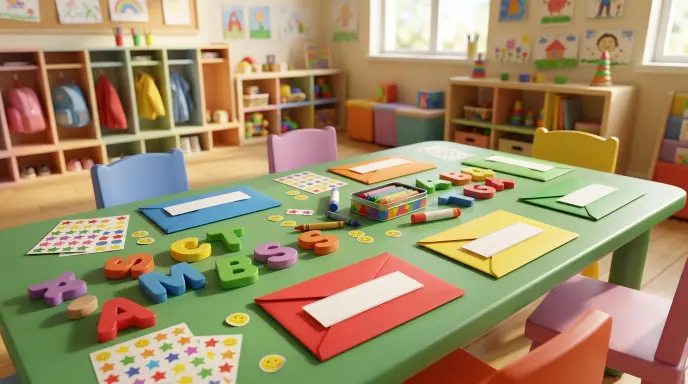
Before children can write their names independently, they need opportunities to recognize them. Short games help them notice their names among other words and connect printed letters with their own identity.
- Find Your Name: Place name cards around the room and ask children to find their own.
- Name Card Match: Match each child’s photograph to the correct name card.
- Name Bingo: Give children boards featuring familiar names and call out a name for them to find.
- Classroom Name Hunt: Hide name cards in easy-to-find places around the classroom.
- Mystery Name Reveal: Cover a name card and reveal one letter at a time.
- Whose Name Is It?: Read a name aloud and invite children to identify the correct card.
- Name Sorting: Sort cards into groups based on first letters.
- Name Partner Match: Match two cards displaying the same name.
- Missing Letter Game: Leave one letter out of a familiar name and ask children to find the missing letter.
- Name Photo Wall: Match classmates’ names to their pictures on a classroom display.
- Name Fishing: Use a pretend fishing rod with a magnet to pick up name cards fitted with safe magnetic pieces.
- Name Detective: Give clues about a name, such as its first letter or number of letters.
- Name Corner Search: Find a name card in a designated classroom area.
- Name Memory Match: Turn over name cards and find matching pairs.
- Daily Name Check-In: Let each child find and place their name card on an attendance board.
Keep early games simple. Children may need a photograph, a color cue, or a familiar name card to help them make the connection.
Fine Motor Name Activities for Kindergarten
Writing names involves more than knowing the alphabet. Children also need to control their fingers and hands to hold tools, form lines, and make small movements. These activities build those skills while keeping name practice at the center.
- Trace and Color: Trace a large printed name and color the letters.
- Dot Marker Names: Use washable dot markers to fill in the letters of a name.
- Sticker Line Tracing: Place small stickers along the outline of each letter.
- Tweezer Letter Pick-Up: Use child-safe tweezers to move large letter pieces onto a name mat.
- Tear-and-Paste Names: Tear paper into small pieces and glue them inside letter outlines.
- Hole-Punch Letter Art: With adult supervision and a child-safe punch, make holes around large printed letters.
- Chalk Name Writing: Practice names using large chalk on a board.
- Ribbon Letter Shapes: Arrange thick ribbons into simple letter shapes.
- Threading Letter Cards: Lace yarn through large holes around a name card.
- Sponge Painting: Dab paint onto outlined letters with a sponge.
- Finger Trail Letters: Follow thick printed letter paths with one finger.
- Crayon Rubbing: Place textured letter templates under paper and rub crayons over them.
- Paper Ball Letters: Make small paper balls and glue them inside printed letters.
- Line-to-Letter Practice: Draw straight, curved, and zigzag lines before forming letters.
- Name Tracing Strips: Trace a name several times, moving from thick letters to thinner outlines.
Avoid expecting perfect handwriting too early. Large letter shapes and short practice sessions are often more comfortable for beginners than long worksheets.
Name Writing Activities for Kindergarten Beginners
Some children can recognize their names but still need help writing the letters. These activities move from simple recognition to guided practice and, eventually, independent writing.
- Trace the Dotted Name: Provide a name written with dotted letters for children to trace.
- Copy From a Name Card: Place a clear name card beside the paper as a reference.
- Rainbow Trace: Trace the same name several times using different crayons.
- First Letter Practice: Focus on the first letter before introducing the entire name.
- Uppercase Name Writing: Practice the uppercase form commonly used at the beginning of a name.
- Uppercase and Lowercase Match: Match lowercase letters to the corresponding uppercase letters.
- Name Writing Journal: Give children a page to practice their names each day.
- Dry-Erase Name Practice: Write a name on a reusable board and erase it after practice.
- Trace, Copy, Write: Start with tracing, move to copying, and finish with writing independently.
- Name Writing Rainbow Road: Draw a path made of letters for children to trace.
- Write and Draw: Write a name at the top of a page and draw a picture below it.
- Name on the Chalkboard: Practice writing large letters on a vertical surface.
- Letter-by-Letter Copying: Copy one letter at a time from a model.
- Name Writing Booklet: Create a small booklet with tracing, copying, and free-writing pages.
- Sign Your Artwork: Encourage children to write their names on pictures they make.
Use each child’s actual name as the starting point. If a name is long, break it into smaller parts so the task feels manageable.
Outdoor Name Activities for Kindergarten
Outdoor learning adds movement and space to early literacy practice. These activities work well on playgrounds, patios, or other safe outdoor areas.
- Chalk Name Paths: Write names on the ground and let children walk beside each letter.
- Jump to Your Name: Place name cards on the ground and ask children to jump to their own.
- Nature Letter Building: Use sticks, leaves, and stones to form simple letters.
- Water Painting Names: Paint names on a fence or wall with water and a brush, where permitted.
- Name Scavenger Hunt: Search for name cards placed around a safe outdoor space.
- Letter Hopscotch: Create a hopscotch grid with letters from familiar names.
- Name Relay: Carry one letter at a time to build a name at a finish line.
- Outdoor Name Sorting: Sort large cards by first letter on a table outside.
- Leaf Letter Collage: Collect suitable fallen leaves and arrange them around a written name.
- Name Obstacle Course: Complete simple movements before finding or building a name.
- Garden Name Signs: Make weather-resistant signs for children’s classroom plants or garden areas.
- Nature Walk Letter Hunt: Look for natural objects shaped like familiar letters.
- Name Beanbag Toss: Toss a beanbag toward the correct name card.
- Find the First Letter: Search for a large card showing the first letter of a name.
- Name Circle Game: Pass a ball around a circle and say the name written on the card held by each child.
Set clear boundaries and adapt movement tasks to each child’s abilities. Outdoor games should focus on recognition and participation rather than speed.
Group Name Activities for Kindergarten Classrooms
Group activities help children learn their own names while becoming familiar with their classmates. They also support listening, turn-taking, and classroom community.
- Morning Greeting Cards: Let children choose a card displaying their name when they arrive.
- Class Name Chart: Create a chart showing every child’s name.
- Name Rhythm Clap: Clap once for each syllable in a child’s name.
- First Letter Circle: Invite children to share the first letter of their names.
- Classroom Name Train: Connect name cards to form a train showing the whole class.
- Name and Movement: Say a child’s name and perform a simple movement together.
- Pass the Name Card: Pass cards around a circle and identify each name.
- Classmate Name Match: Match classmates’ pictures to their printed names.
- Name Song: Sing a simple classroom song that includes each child’s name.
- Name Interview: Ask a partner to identify the letters in their name.
- Shared Alphabet Wall: Place names under their starting letters on a classroom display.
- Name Graph: Sort names by their first letter and compare the groups.
- Classroom Name Puzzle: Assemble a large display made from individual name cards.
- Name Cheer: Create a short cheer that spells out a child’s name.
- Who Is Missing?: Remove one name card from the class chart and ask children to identify the missing classmate.
Make sure every child gets a turn without being pressured to speak in front of the whole group. Children who feel shy can point to their cards or participate with a partner.
Seasonal Name Activities for Kindergarten
Seasonal themes make familiar literacy practice feel fresh. The same basic name skills can be used with different colors, shapes, and classroom decorations throughout the year.
- Fall Leaf Names: Decorate name cards with paper leaves.
- Pumpkin Letter Patch: Write names on pumpkin-shaped cards and arrange them on a wall.
- Snowflake Name Art: Add paper snowflakes around a name.
- Winter Mitten Names: Write one letter on each mitten shape and arrange them in order.
- Heart Name Craft: Fill a heart outline with the letters of a child’s name.
- Spring Flower Names: Put each letter on a flower petal.
- Butterfly Letter Match: Match letter wings to a butterfly body displaying a name.
- Rainy Day Name Clouds: Write names on clouds and add paper raindrops.
- Summer Sun Names: Place a name inside a sun shape and add colorful rays.
- Beach Name Art: Use beach-themed drawings around a name card.
- Back-to-School Name Tags: Let children decorate name tags for their desks or cubbies.
- Birthday Name Crown: Make a crown displaying the birthday child’s name.
- Holiday Ornament Names: Decorate paper ornaments with names and letters.
- Apple Name Trees: Put name cards on paper apples attached to a classroom tree.
- Rainbow Spring Letters: Color each letter of a name in a different shade.
Choose themes that fit your classroom calendar and the children you teach. Everyday seasonal materials can make these projects inexpensive and easy to prepare.
Name Activities for Kindergarten Using Simple Classroom Supplies
You do not need expensive learning kits to help children practice their names. Many useful activities can be made with paper, markers, recycled materials, and basic classroom tools.
- Paper Plate Names: Write a name on a paper plate and decorate the border.
- Envelope Letter Sort: Place letter cards in an envelope and find the ones needed for a name.
- Index Card Names: Write one letter on each card and arrange them in order.
- Reusable Plastic Sleeve Practice: Put a name worksheet inside a clear sleeve for dry-erase tracing.
- Cardboard Letter Building: Cut large letters from cardboard for children to arrange.
- Sticky Note Names: Write one letter on each sticky note and line them up.
- Recycled Box Letter Match: Use clean cardboard packaging to create letter cards.
- Paper Bag Name Puppet: Make a simple puppet and add the child’s name to its shirt.
- Cup Stack Names: Write letters on paper cups and stack them in the correct order.
- Clipboard Name Practice: Take name-writing sheets to a different learning area.
- File Folder Name Match: Attach name models to a folder and match loose letters to them.
- Paper Strip Tracing: Use long strips of paper for large, clear name practice.
- Whiteboard Name Race: Let children write or build their names at their own pace, without making speed the goal.
- Classroom Sign-In Sheet: Invite children to find or write their names during arrival.
- Name Bookmark: Decorate a bookmark with a child’s name and favorite pictures.
Store reusable materials in labeled containers so children can access them during independent learning time.
How to Choose the Best Name Activities for Kindergarten
The most useful activity is one that matches a child’s current skills. Some kindergarten students may already write their names with ease, while others are still learning to recognize the first letter. A flexible approach makes the experience more positive for everyone.
Start With Name Recognition
Show children their names on cards, cubbies, or classroom displays. Use a consistent model so they can become familiar with the shape and order of the letters.
Match the Activity to Their Skill Level
Children who are just beginning may benefit from matching cards and large letter pieces. Those who can identify most letters can move on to tracing and copying. Children who write independently can practice their names in drawings, journals, and classroom projects.
Use Materials Children Enjoy
Some children prefer paint and stickers, while others enjoy blocks, puzzles, or movement games. Offer a few choices and let children take part in activities that interest them.
Keep Practice Short and Positive
A few minutes of focused practice can be more useful than a long session that causes frustration. Praise effort, persistence, and progress instead of expecting perfect letter formation.
Practice Correct Letter Order
Use a name card as a reference whenever children build names with loose letters. Encourage them to look at the model from left to right and check that each letter is in the right place.
Include Both Uppercase and Lowercase Letters
Many name cards begin with an uppercase first letter followed by lowercase letters. Help children notice the difference while following the writing style used in your classroom.
Make Activities Accessible
Use larger materials for children who need help handling small objects. Provide visual examples, extra time, or hand-over-hand support only when appropriate and welcomed. Adapt tasks to individual learning needs.
Encourage Independence
As children become familiar with their names, gradually reduce the amount of help you provide. Move from a full name model to a partial prompt, then invite the child to try independently.
FAQs:
What is the best name activity for kindergarten beginners?
Name matching is a great starting point. Give children a card with their name and ask them to find the matching card or arrange loose letters to copy it. This introduces letter recognition without requiring independent handwriting right away.
How can I teach kindergarten children to write their names?
Begin with a clear name model. Let children trace large letters, copy the name, and then try writing it on their own. Practice should be brief, encouraging, and suited to each child’s abilities.
What are some fun name activities for kindergarten at home?
Try magnetic letter building, rainbow name writing, play dough letters, sticker art, or tracing names in a tray of sand. These activities use simple materials and can fit into short periods of play.
How do name activities help early learning?
They give children practice recognizing letters, noticing letter order, developing hand control, and connecting printed words with familiar people. Group activities can also encourage turn-taking and classroom participation.
How often should kindergarten children practice writing their names?
Short, regular opportunities are usually a good approach. Children can practice during arrival, art time, or simple writing activities. Adjust the frequency and difficulty based on interest, progress, and classroom needs.
Should children learn uppercase or lowercase letters first?
Many classrooms teach children to recognize an uppercase first letter followed by lowercase letters in their names. The best approach is to use a consistent model and follow the school’s early-writing guidance.
What supplies do I need for name activities?
Common supplies include paper, crayons, washable markers, alphabet cards, glue sticks, play dough, magnetic letters, and dry-erase boards. Choose safe, age-appropriate materials and supervise activities that involve small pieces or messy substances.
How can I make name-writing practice less frustrating?
Use large letters, offer a visible model, and break long names into smaller steps. Let children build or trace letters before writing them independently. Focus on effort and progress rather than perfect handwriting.
Conclusion:
Name-learning activities give kindergarten children a fun way to build early literacy skills and confidence. From sensory trays and creative crafts to matching games and writing practice, there are plenty of ways to make learning personal and enjoyable.
Start with activities that suit each child’s current ability, use familiar materials, and offer plenty of encouragement. With regular, playful practice, children can gradually learn to recognize, build, and write their names with greater independence.